Pentecost 3
Sheep Detectives
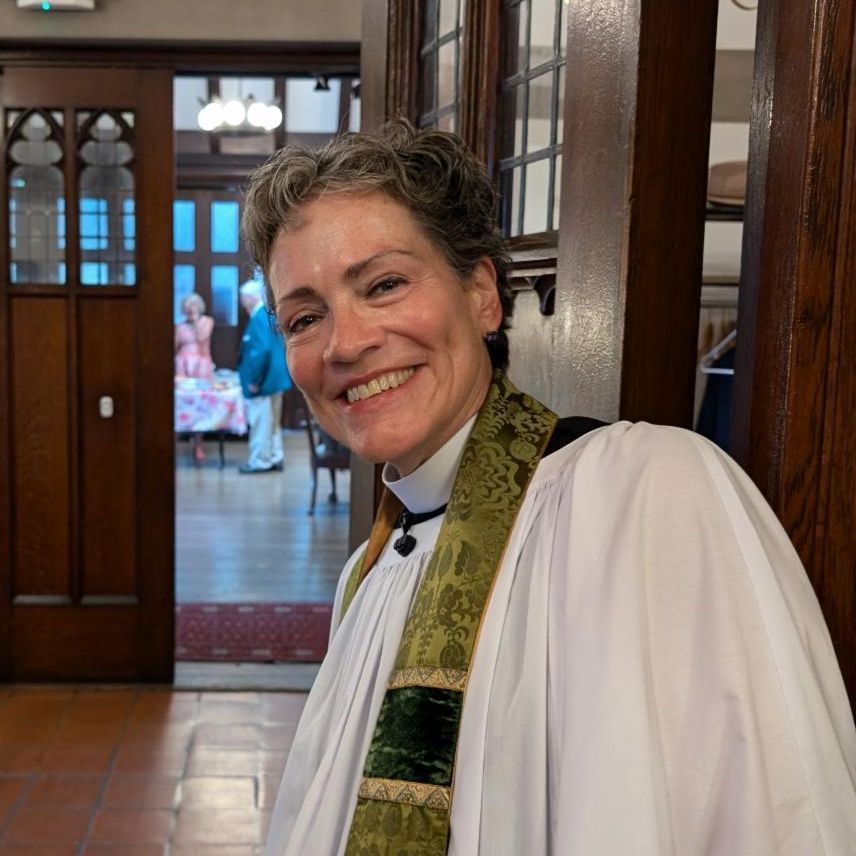
Most of you know by now that I’m pretty predictable. I love farming and animals of all kinds, and I love stories. I’ll read a book, a Kindle, short stories in The New Yorker, a friend’s novel manuscript, listen to audiobooks while I work in the kitchen or the garden, or watch stories brought to life on TV. Jere and I have been immersed through the cold winter evenings into the cold spring evenings — that seem to have ended about three days ago — in mysteries of all kinds, on PBS, Britbox, Netflix, you name it — and every genre too from the standard Whodunit to the police procedural, the Locked Room, the historical, the hardboiled and noir — to maybe my favorite, the cozy mystery.
A cozy mystery is usually set in a small, close knit community, and any violence necessary to the plot takes place off screen. I especially love the ones set around a church community, especially when the priest or another religious official solves the crime — think Grantchester, Father Brown, Sister Boniface, and Collateral with Nicola Walker, one of my favorites no matter the genre. So you can imagine my interest was piqued when Nellie and Duffy sent me the trailer for Sheep Detectives, a new movie combining all of my interests — a small community centered on the church, a cozy mystery based on murder mysteries (stories within the story, for you literature lovers out there), farming, and — you guessed it! — sheep.
Obviously, the next logical step was to check out this essential gospel commentary as an important order of church business, so Duffy and I headed out Thursday afternoon to the Jane Pickens theater to preview this movie for you. Our review? Ask Duffy what they saw, because there will be as many insights as we all have eyes and ears, but from my perspective, Sheep Detectives punches way above its theological weight class for a movie with human actors and talking sheep — CGI generated, for sure, but entirely realistic in context.
These sheep, like me, love a good mystery, and their shepherd, George, who knows them each by name, reads mysteries to them every night. No spoiler alert here — I will not reveal key plot points or the amazing conclusion, because I want you to see and enjoy this movie and then come back and tell me what you saw. I will say that some of the images and perspectives opened new insights for me in our own holy mysteries around the sheep of scripture, and how we inhabit the mysteries of our faith as expressed in the imagery of the gospels.
The sheep, we learn, have a concept of the afterlife but not of death. They believe that at the end of life, they painlessly transform into clouds and ascend into the sky. If this sounds silly, the sheep are just as mystified by our faith claims. As they pass the village church, Lily asks, Who lives there? When Sebastian answers God, Lily reasonably replies, Who’s God? Well I buckled my seatbelt for that one, because God’s people have struggled with how to describe our real human experience with God since before the Gospels were even written down. As we read and pray our way through Ordinary Time in scripture, you’ll hear and experience again and again how often the disciples — and we, listening in today — struggle with articulating and understanding these holy mysteries. God, Sebastian answers, damns things sometimes. Like a beaver? Lily asks. Yes, Sebastian replies, revealing how easy it is to misunderstand a homonym, especially when we’re coming in late on a conversation! God is also, Sebastian continues, both lamb and shepherd, invisible, made of bread, and eaten on Sundays. Poor God, Mopple says.
Both this entirely foreseeable misunderstanding and the wildly holy images and insights that emerge along the way result from our own unique experiences and the language we use to describe them. Language can be really tricky, confusing and enlightening at the same time, and yet it’s the foundation and means of communication, understanding, and relationship. In these days after Pentecost, we find our strength in knowing that Jesus sees us when we feel disconnected. When we are harassed and helpless, like sheep without a shepherd as we read this morning from Matthew’s gospel, Jesus is already reaching for us, bringing us back into the fold of community. All our unique perspectives and differences are part of the plan — even though that can make things confusing sometimes.
A central theme in Sheep Detectives is that each of the sheep have a name, and the shepherd knows them all. A name represents our singular identity — essential, unique, and beloved by God, called to awesomeness in each of our own ways. Think of our scripture this morning: God has just renamed Abraham and Sarah — formerly Abram and Sarai — for their new lives and their new roles as our forbears in the faith. God calls them by name again in today’s reading, as Isaac is named for his mother’s laugh of incredulity when God told her she’d bear a child after an adult lifetime of infertility.
In Matthew’s gospel, each of the apostles is individually listed and named — Simon, Andrew, James, Philip, Bartholomew, Thomas, Matthew, James son of Alphaeus, Thaddaeus, Simon, and even Judas Iscariot, because each of us has our own role, unique identity and purpose, a specific place to fit and to belong. The diversity of our individual humanity makes life both confusing and wildly, surprisingly, and endlessly holy. Our name — Emmanuel — means God with us. That’s both our unique identity and our calling. And each of us has our own unique identity, purpose, and calling in this community.
Jesus tells us this morning in Matthew’s gospel that he’s sending us out like sheep into the midst of wolves, telling us that to navigate successfully the peaks and valleys of our individual and collective humanity — the diversity of our language, lived experience, capacity, and needs— we must be wise as serpents and innocent as doves. That means making our way with both prudence and purity, alert to danger, but never cynical, manipulative, or harsh. Being wise as serpents and innocent as doves means staying clear-eyed about the world, while keeping a gentle, truthful, and forgiving spirit, and remembering that we all belong. Is this easy? Good Lord, no!! Just ask any of the other sheep. But as Sebastian says — in one spoiler that I will share: We have to. It’s our flock. Amen
Sermons